

How Modern Label Printer Technology Is Transforming Small Business Operations
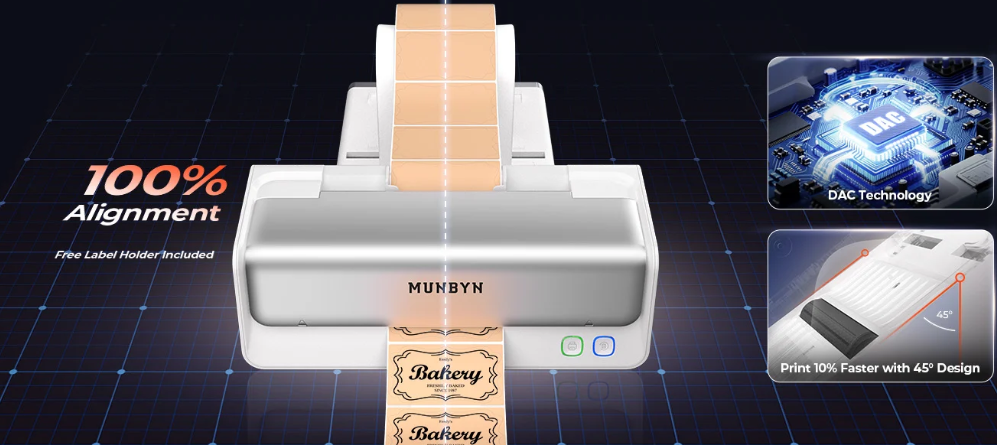
Industry Shift Toward Wireless, Cost-Efficient Labeling Solutions Continues to Drive Growth in E-Commerce and Logistics Sectors
CALIFORNIA, CA, UNITED STATES, September 21, 2026 /EINPresswire.com/ -- The role of label printing is changing as small businesses, retailers, e-commerce sellers, and logistics operators adapt to increasingly digital and distributed workflows. Once primarily associated with desktop shipping stations, thermal label printers are now being used across a wider range of business environments. Mobile devices, cloud-based commerce platforms, online marketplaces, and increasingly flexible fulfillment operations have changed how businesses create and manage labels.These developments are also changing the criteria businesses consider when evaluating label printing equipment. Connectivity, compatibility, print resolution, workflow flexibility, and ongoing operating requirements have become part of the purchasing conversation alongside traditional considerations such as printing speed and label format.
MUNBYN, a provider of business hardware and thermal printing equipment, is examining these developments as part of its ongoing focus on small-business printing workflows.
E-Commerce Continues to Shape Label Printing Workflows
Shipping labels remain a routine requirement for businesses selling products online. For small e-commerce operations, labels may be generated from a home office, a small warehouse, a retail location, or a shared workspace rather than from a dedicated fulfillment facility. That change in operating environment has increased the importance of flexible printing workflows.
Businesses may use platforms such as Shopify, Amazon, eBay, or Etsy to manage orders while relying on separate tools for inventory, shipping, and customer management. The label printer sits between these systems and the physical fulfillment process, turning digital order information into a label that can be attached to a package. As a result, compatibility has become an important consideration when businesses evaluate printing equipment.
Bluetooth Printing Expands Mobile Workflows
One of the more visible changes in the category has been the increased availability of Bluetooth-connected thermal printers. Traditional label printing often required a printer to remain connected to a desktop computer. Bluetooth connectivity allows compatible mobile devices to communicate with a printer without requiring the same physical workstation.
For small businesses, this can support different working arrangements. A retailer may prepare labels from a tablet, while a warehouse employee may use a smartphone to access an order and initiate a print job closer to where packages are being prepared.
The value of wireless connectivity depends on the business's workflow and the devices and operating systems it uses. Businesses considering a Bluetooth label printer therefore need to check supported mobile platforms, applications, and connection methods before implementation. The broader trend reflects a shift toward printing as part of a mobile workflow rather than an activity tied to a single desktop location.
Platform Compatibility Becomes a Practical Requirement
Modern businesses rarely rely on a single software platform. An online seller may use one platform to receive orders, another to manage shipping, and additional tools for inventory or accounting. Retail businesses can have similar combinations of point-of-sale, inventory, and fulfillment software.
This makes printer compatibility an increasingly practical issue. A label printer does not operate independently of the rest of the workflow. The ability to connect with the operating system, browser, application, or shipping platform already used by a business can affect how easily employees can create and print labels.
For small businesses without dedicated IT teams, straightforward setup can also be relevant. A system that requires extensive configuration may create additional work, while compatibility with commonly used operating systems and applications can simplify deployment.
Print Resolution Matters for Different Label Applications
Resolution is another consideration that has become more visible as businesses use thermal printers for applications beyond basic shipping labels. A 203 DPI printer may be sufficient for many standard shipping applications. Businesses printing smaller text, detailed graphics, product information, or certain barcode formats may instead consider higher-resolution options such as 300 DPI.
The appropriate resolution depends on the label size, content, viewing distance, and application. This distinction is particularly relevant for businesses that use the same printer for multiple purposes. A single device may be used for shipping labels, product labels, inventory identification, barcodes, file organization, or other internal applications. Rather than treating resolution as an isolated specification, businesses can evaluate it in relation to the types of labels they actually produce.
Thermal Printing and the Changing Role of Consumables
Thermal printing also differs from traditional inkjet printing in how printed information is produced. Direct thermal printers use heat-sensitive material and do not require ink cartridges or toner. This makes them particularly common in applications where businesses regularly produce short-lived labels, including shipping and logistics.
However, thermal printing does not eliminate material considerations. Direct thermal labels require compatible thermal media, and the durability of the printed result depends on the label material and environmental conditions. For businesses evaluating printing costs, the relevant calculation therefore extends beyond the initial printer purchase. Label media, replacement requirements, printing volume, and the expected lifespan of printed information all form part of the operating picture.
One Printer, Multiple Labeling Tasks
Another development in small-business printing is the use of a single thermal printer for multiple labeling requirements. A business that ships products may need shipping labels, return labels, inventory labels, barcode labels, and internal organization labels. Retailers may also need product or shelf labels.
Using one compatible printing system for several of these tasks can simplify employee workflows, although the suitability of a particular printer depends on supported label widths, media types, resolution, and software compatibility. This flexibility is particularly relevant to smaller businesses, where the same employees may handle order processing, inventory, packaging, and shipping rather than working within separate specialized departments.
The Importance of Workflow Rather Than Individual Specifications
As thermal printers become available across a wider range of business applications, comparing individual specifications alone may not provide a complete picture.
Printing speed, for example, can be important for a high-volume fulfillment operation but less significant for a small business processing a limited number of orders each day. Similarly, Bluetooth connectivity may be useful for a mobile workflow but unnecessary for a fixed desktop shipping station. A 300 DPI printer may be appropriate for businesses that print detailed labels, while a lower-resolution model may meet the requirements of standard shipping applications.
Businesses can therefore evaluate equipment based on several questions:
-How many labels are printed each day?
-Which label sizes and materials are required?
-Which operating systems and platforms are already in use?
-Will labels be printed from desktop or mobile devices?
-Is higher print resolution necessary for the intended applications?
-What are the ongoing costs of label media?
-Does the printer need to support multiple types of labels?
This approach places the printing device within the context of the broader business workflow.
Mobile and Distributed Operations Continue to Influence the Category
The changing structure of small-business operations is another factor influencing label printing. Not every online seller operates from a conventional warehouse. Businesses may fulfill orders from retail stores, home offices, studios, shared workspaces, or small storage facilities.
For these businesses, equipment that can adapt to different work environments may be more relevant than equipment designed around a fixed industrial workflow. The growth of mobile commerce and flexible fulfillment has consequently created more use cases for compact thermal printing equipment. The underlying requirement remains the same: converting digital order or product information into a physical label accurately and consistently.
What Businesses Can Consider When Choosing a Thermal Label Printer
The expanding range of thermal printing applications means there is no single specification that determines whether a printer is appropriate for every business.
Businesses with high shipping volumes may prioritize printing speed and workflow throughput. Businesses using mobile devices may place greater emphasis on Bluetooth connectivity. Sellers producing detailed product labels may consider 300 DPI resolution, while businesses focused primarily on standard shipping labels may have different requirements.
Compatibility should also be evaluated before purchase. Businesses can review the printer's supported operating systems, applications, label dimensions, connection methods, and printing technology alongside their existing workflow. These considerations can help businesses avoid choosing equipment based solely on headline specifications that may not correspond to their actual printing requirements.
MUNBYN Follows the Evolution of Small-Business Printing
MUNBYN develops business hardware for applications including thermal label printing, shipping, inventory management, and related workflows. Its thermal printer portfolio includes models supporting different combinations of resolution, connectivity, label formats, and operating systems. The company's products are used across applications such as shipping, product identification, barcode printing, and business organization.
The evolution of these products reflects broader development in the category: thermal label printing is increasingly seen as part of a connected business workflow rather than standalone office equipment. As e-commerce, mobile work environments, and multi-platform business operations continue to develop, businesses will likely evaluate label printers based on how well they fit into existing systems and processes.
About MUNBYN
MUNBYN provides business hardware and technology products for retail, e-commerce, shipping, inventory, and everyday business workflows. Its product portfolio includes thermal label printers, shipping labels, barcode scanners, money counters, and related equipment. For more information, visit MUNBYN.
Nada
MUNBYN
email us here
Legal Disclaimer:
EIN Presswire provides this news content "as is" without warranty of any kind. We do not accept any responsibility or liability for the accuracy, content, images, videos, licenses, completeness, legality, or reliability of the information contained in this article. If you have any complaints or copyright issues related to this article, kindly contact the author above.
