

New Quick Connect DIY Mini Split Line Launched by Zone Air
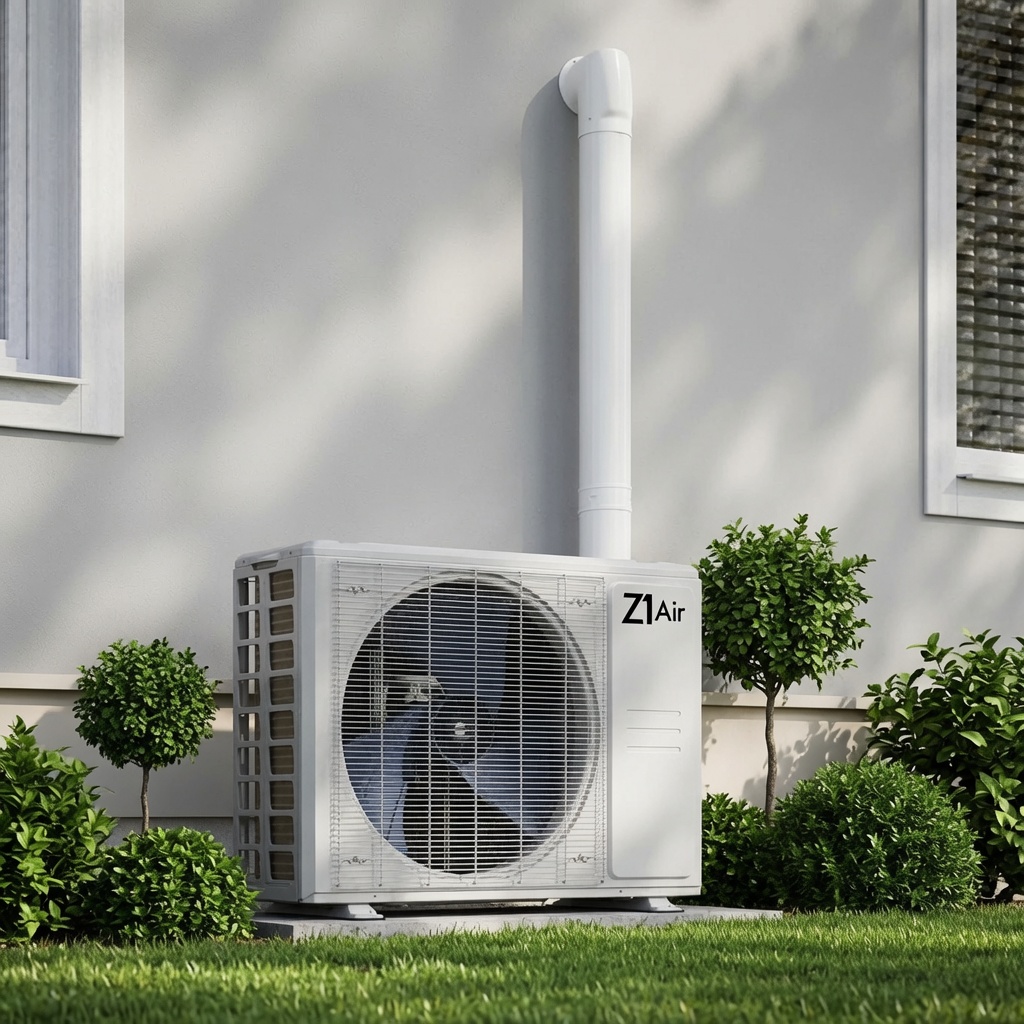
Zone Air Quick Connect DIY Mini Split Outdoor Unit

Zone Air Quick Connect DIY Indoor Unit
Zone Air announced the launch of its newest line of quick connect DIY mini splits.
SALT LAKE CITY, UT, UNITED STATES, August 4, 2026 /EINPresswire.com/ -- Zone Air announced the launch of its newest line of quick connect DIY mini splits. Customers asked for a better DIY solution, Zone Air answered, and its newest product line doesn’t disappoint.Adding heating and cooling to a garage, home office or bedroom has never been easier with the latest Zone Air series of mini splits. The company’s newest quick connect DIY mini split line allows for DIY installation in as little as two hours and is designed to be among the easiest mini split systems for homeowners to install.
These new systems combine quick connect pre-charged R-454B line sets, highly efficient inverter technology, cold-climate heating and built-in smart controls. The product line specifically includes options for bedrooms, garages, workshops, home offices, finished basements, additions and other spaces where extending conventional ductwork would be expensive or impractical.
So what exactly makes these systems so great, and what did Zone Air change? From planning and installation to maintenance, here are the latest improvements.
Redesigned Valve Connections Simplify Installation
At the center of the new Zone Air line is its pre-charged quick connect system. Zone Air’s newest systems use two redesigned valve structures intended to improve upon older designs and valve structures used in competing systems.
“Based on our experience and internal testing, our newest valve structures performed nearly 200% better in leakage testing compared with older designs and competing valve structures,” said Tom Johnson, a spokesperson for the company.
These new designs eliminate or reduce several problems found in other DIY mini split systems that use similar valves:
Refrigerant loss caused by temporary overpressurization, with automatic system alerts designed to identify abnormal conditions
Long-term refrigerant leakage, with nearly 200% better performance in Zone Air’s internal leakage testing
Conventional internal valve structures that may weaken under pressure, replaced by an expanding structure designed to become more secure as system pressure increases
Every Zone Air line set and valve structure included with a DIY quick connect system undergoes both vacuum and pressure testing before being shipped to a customer.
“Homeowners told us they wanted a system that was truly DIY throughout the life of the unit—not one that would break down and immediately require an HVAC technician later on,” said Johnson. “We designed our line around tested quick connect valve connections, a strong warranty and maintenance alerts that can help extend the life of the unit.”
Designed for Common Household Tools
Installing a Zone Air quick connect system only requires a drill, level, torque wrench and ordinary hand tools.
Zone Air’s 9,000 and 12,000 BTU 115V wall-mounted models can plug into an appropriate grounded household outlet. Larger 18,000 BTU systems and multi-zone configurations operate on 230V power and may require a dedicated circuit installed or verified by a qualified electrician.
All electrical work, equipment placement and mounting must comply with applicable local building and electrical codes.
Up to 24 SEER2 and Cold-Climate Heating
The newly launched Zone Air systems reach efficiency ratings of up to 24 SEER2 on select 230V wall-mounted models, while available 115V configurations reach approximately 22 to 23 SEER2.
Inverter-driven compressors automatically adjust their operating speed to match the heating or cooling demand of the room. This allows the system to maintain a more consistent temperature while reducing the frequent on-and-off cycling associated with traditional single-stage equipment.
Zone Air’s cold-climate heat-pump models are designed to continue providing heat at outdoor temperatures as low as approximately -13°F. This makes the systems suitable for both supplemental and primary heating applications in many regions of the United States, depending on climate, building characteristics and system sizing.
Because mini splits deliver conditioned air directly into the room, they also avoid the energy losses associated with conventional duct systems.
Smart Controls Included
Every Zone Air system includes a backlit handheld remote with Cool, Heat, Dry, Fan and Auto operating modes. Users can also adjust fan speed, control louver movement, set timers and activate the “Follow Me” function, which measures temperature near the remote rather than only at the indoor unit.
A built-in Wi-Fi module connects the system to Zone Air’s companion mobile application for iOS and Android. Through the app, homeowners can:
Adjust temperature and operating mode remotely, Create heating and cooling schedules, Change fan speeds, Pre-cool or preheat a room, Receive filter reminders and system notifications
The systems are also compatible with Amazon Alexa and Google Assistant for supported voice-control functions. Intended for Garages, Offices, Basements and More
Zone Air developed the quick connect line for rooms and buildings that are difficult or costly to reach with conventional ductwork.
Common applications include detached garages and workshops, home offices, bonus rooms, finished basements, sunrooms, home additions and historic properties where installing new ducts could damage existing walls or architectural features.
Single-zone systems provide independent temperature control for one room, while available dual- and three-zone configurations allow multiple indoor units to operate from a single outdoor condenser.
Homeowners can choose among wall-mounted, ceiling-cassette and concealed indoor-unit configurations based on the layout and appearance of the space.
Installation Guidance and U.S.-Based Support
Zone Air provides a detailed installation manual, sizing resources, instructional videos and direct support for homeowners completing their own installations.
The company emphasizes the importance of carefully routing the pre-charged line set. According to Zone Air’s support team, one of the most common installation mistakes is excessively bending or kinking the copper tubing.
Homeowners should maintain wide, gradual bends, protect the line set where it passes through walls, preserve the factory insulation and support the tubing to prevent strain at the fittings. A severely kinked line set should be replaced rather than bent back into shape.
“The equipment is designed to simplify installation, but proper installation still matters,” added Johnson. “Correct sizing, careful line-set routing, accurate torque and code-compliant electrical work are essential to long-term performance.”
Zone Air quick connect DIY mini-split systems are available now through the Zone Air website. Customers can browse systems by capacity, voltage, indoor-unit style and number of zones and use the company’s sizing tools to select an appropriate configuration.
ben liddel
Zone Air
email us here
Legal Disclaimer:
EIN Presswire provides this news content "as is" without warranty of any kind. We do not accept any responsibility or liability for the accuracy, content, images, videos, licenses, completeness, legality, or reliability of the information contained in this article. If you have any complaints or copyright issues related to this article, kindly contact the author above.
